




About Winslow Homer
Winslow Homer (1836–1910) is often described as the foremost American painter of the nineteenth century. He began as an illustrator, sketching the Civil War for Harper's Weekly, and went on to paint rural childhood, farm life and, from the 1880s, the sea. In 1883 he settled at Prout's Neck on the Maine coast, where the waves breaking on the rocks below his studio became his central subject.
The 18 prints in this collection follow that arc. Snap the Whip (1872), School Time and Boys Wading capture the post-war American countryside. The Veteran in a New Field and The Cotton Pickers address the war and its aftermath. Northeaster, Eastern Point, West Point, Prout's Neck and Maine Coast are among his great late seascapes, and The Gulf Stream (1899) is one of the most discussed paintings in American art: a lone sailor adrift among sharks and a rising waterspout.
Homer works in this collection
- The Gulf Stream
- Snap the Whip
- Northeaster
- Eastern Point
- West Point, Prout's Neck
- Maine Coast
- Undertow
- Summer Squall
- Incoming Tide, Scarboro, Maine
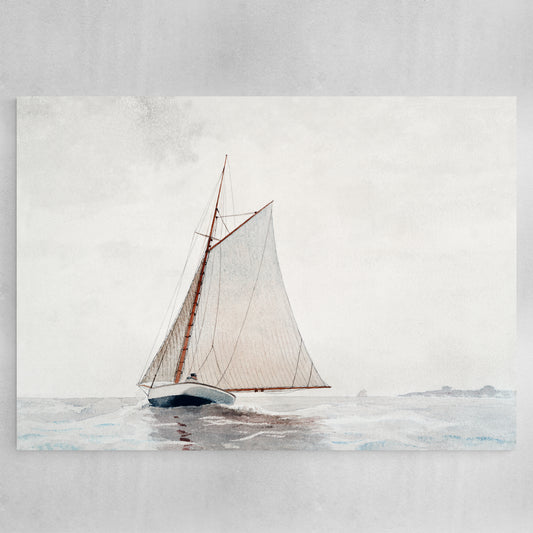
- Sailing off Gloucester
- The Veteran in a New Field
- The Cotton Pickers
- Boys Wading
- School Time
- Dad's Coming
- The Flirt
- Two Guides
- Farmyard Scene
Which Homer works suit a first purchase?
The Maine seascapes are the most characteristic of his mature style and hold up well at large sizes. The 1870s rural scenes are smaller in mood and suit closer viewing. All are printed on fine art paper or museum canvas in multiple sizes.